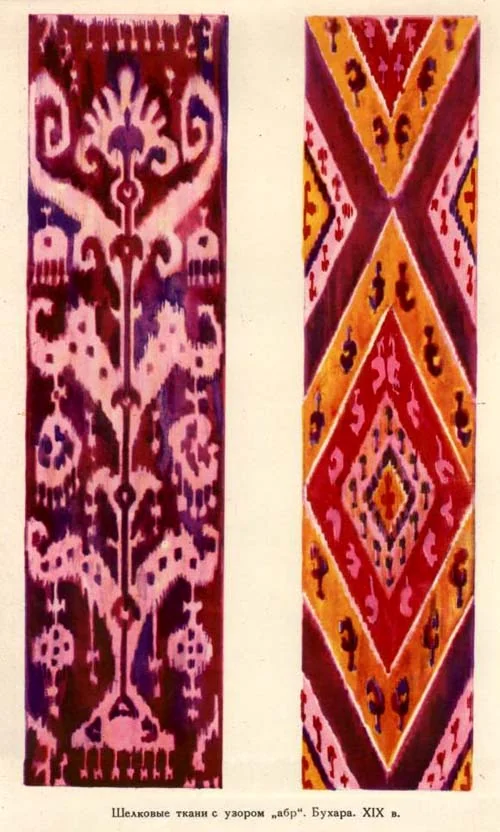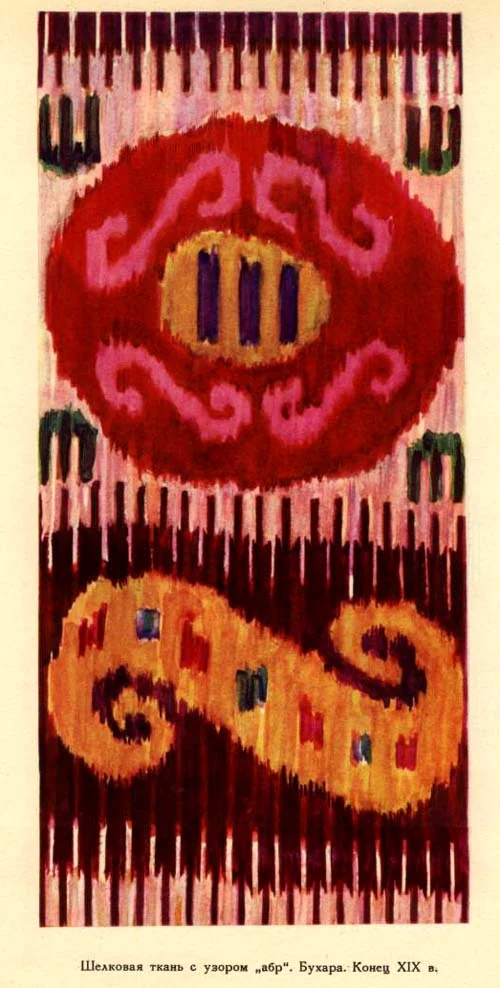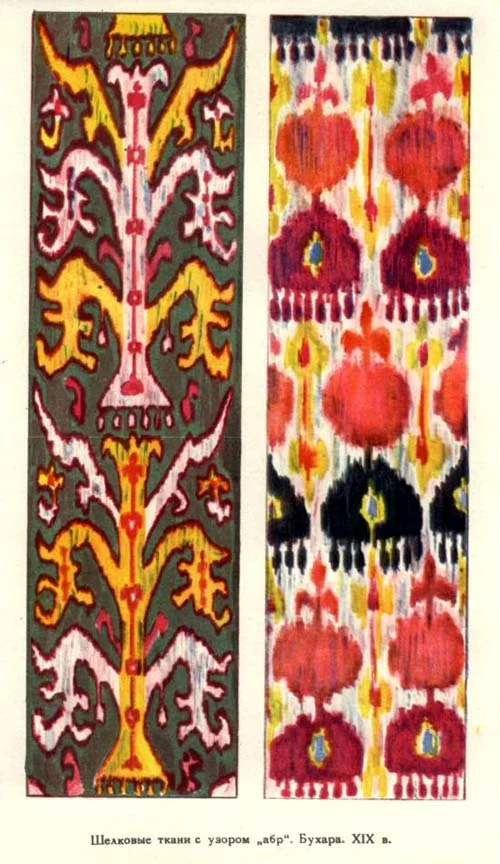

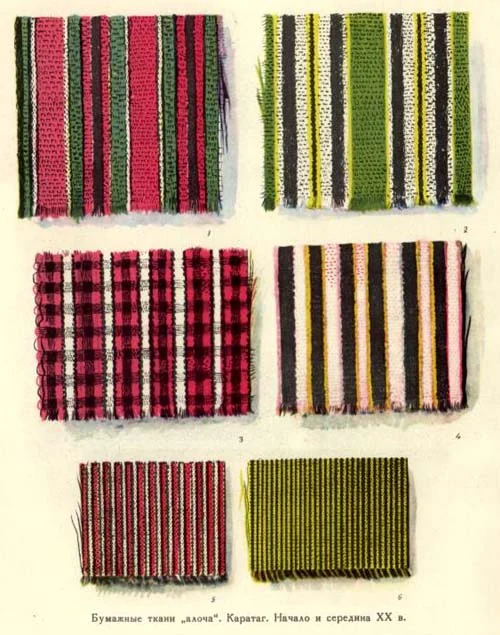
Among these fabrics, the most popular are bekasab ornamented with multicolored stripes and patterned abr silks. In both groups, a common feature of the artistic decoration is the use of a colored warp: striped fabrics are created by varying the different colors of the warp threads, while in the production of abr fabrics the warp threads are dyed by a special technique, abrband, and, when the loom is set up, are arranged into complex ornamental compositions.
Harness-weave fabrics include silk shoyi and half-silk fabrics of the European reps type, called adras or dagir. In the latter, the warp is natural silk and the weft is cotton, dyed one of the bright colors or left white. The weft thread is several times thicker than the warp thread, which gives the surface of the fabric a ribbed texture.
Shoyi is used for women's clothing. These smooth-textured fabrics, which drape freely and easily, remain to this day favorites for elegant national women's clothing.
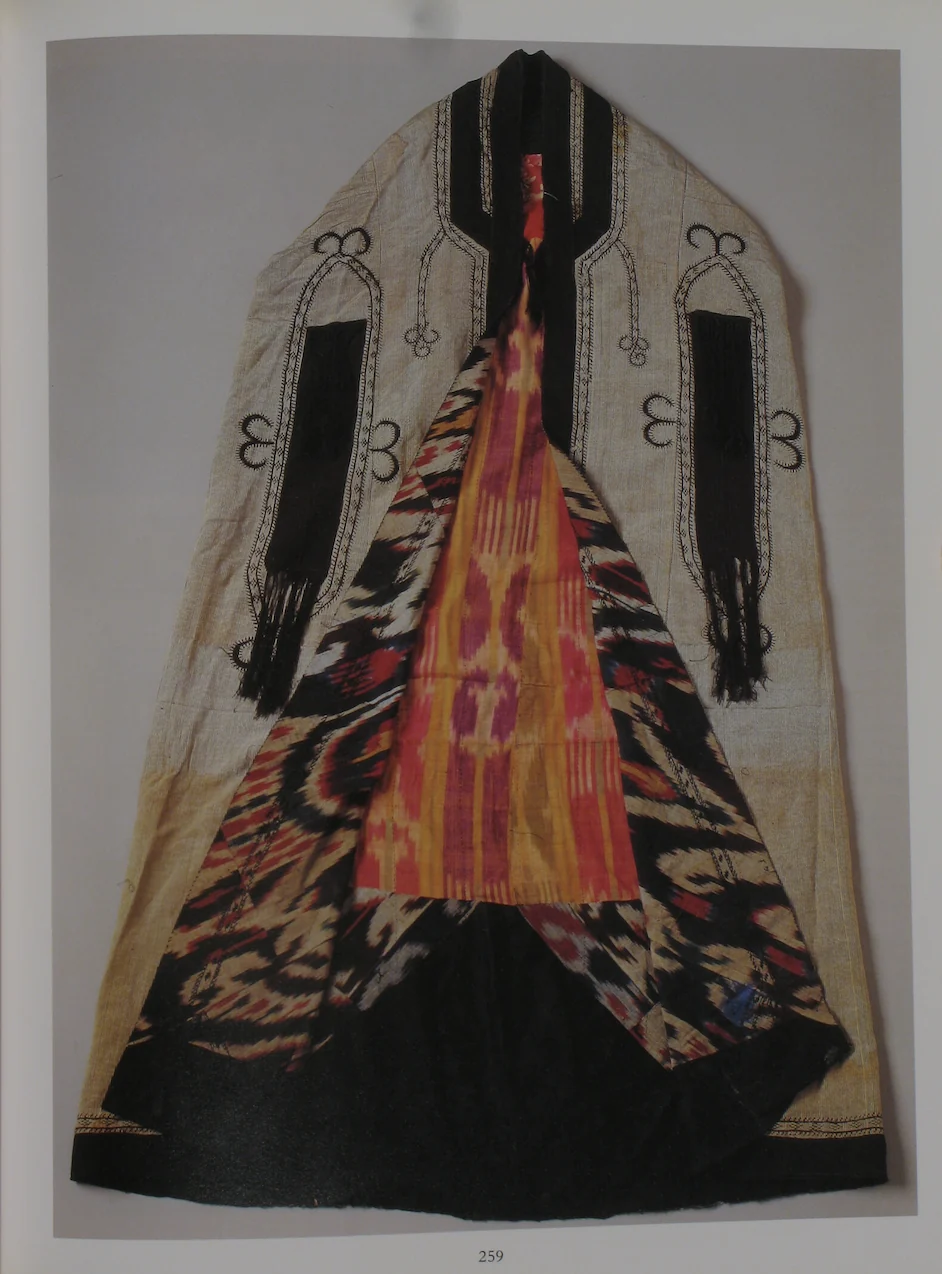
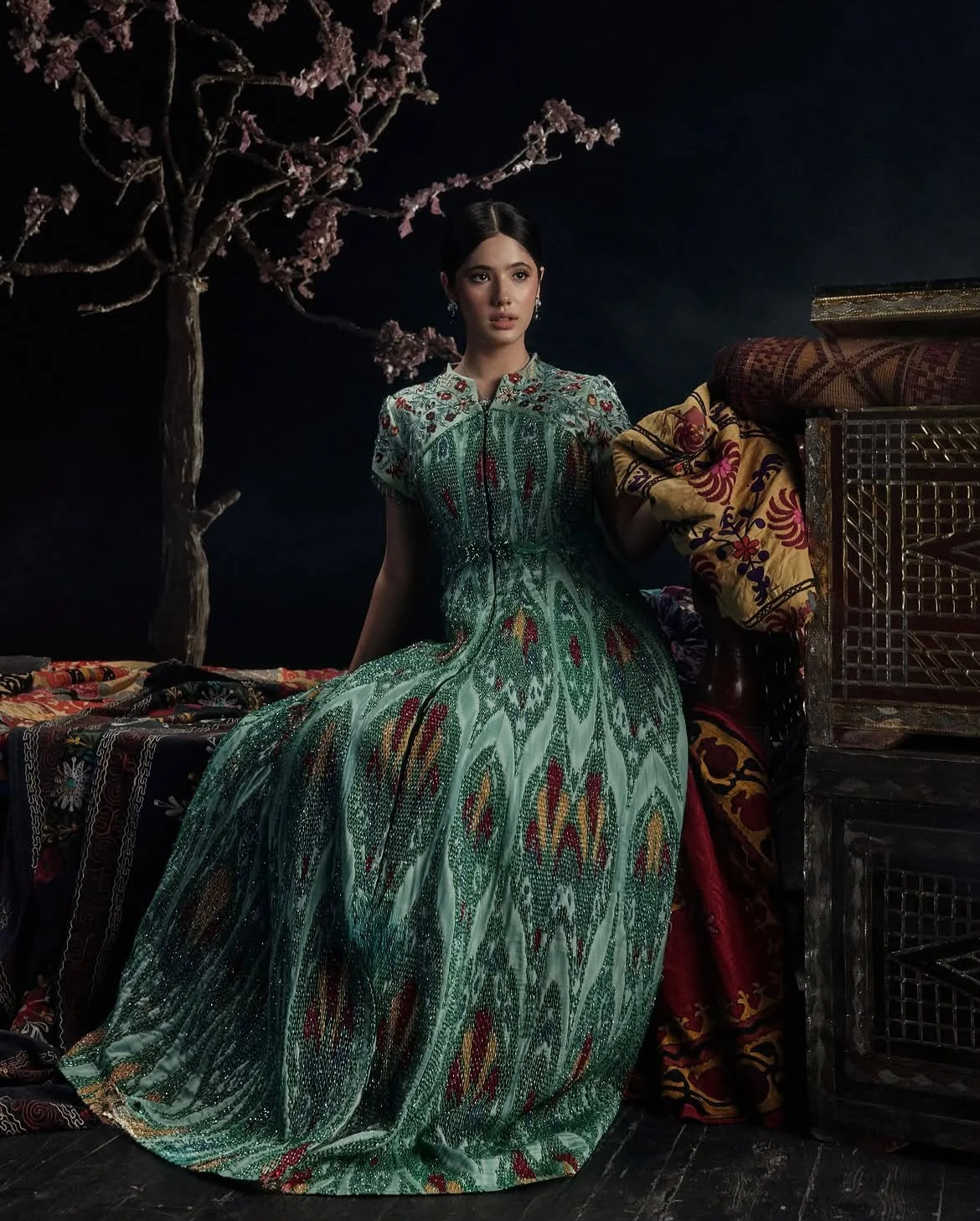
Until the beginning of the twentieth century, in the central regions of present-day Uzbekistan, especially the Bukhara and Surkhandarya regions, men's robes of strict straight cut were sewn from abr adras. At present, abr fabric is used in men's clothing only for making waist scarves, which form part of the men's national costume.
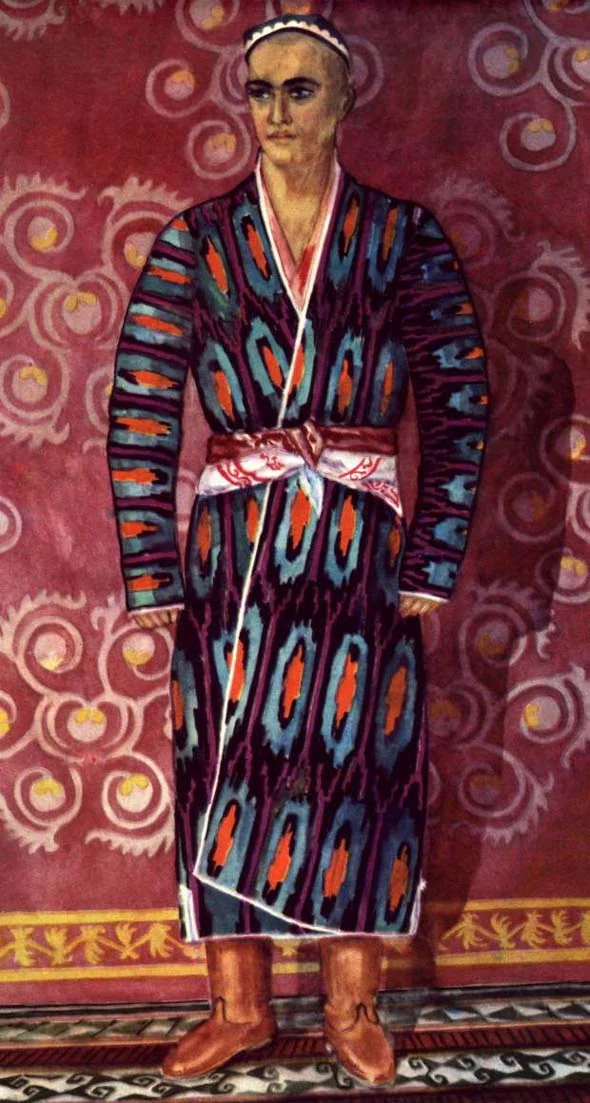
The group of atlas-weave fabrics includes pure silks:
- four-harness fabrics called turt-tepkilik, simply called atlases;
- eight- and twelve-harness fabrics called sakkiz-tepkilik and unikki-tepkilik, known as khanatlas;
- and also half-silk fabrics called yakruya.
The higher the harness count, the fuller and brighter the external effect of the abr pattern, its elegance and cheerfulness. It is not by chance that the eight- and twelve-harness atlases are called "khan's atlases," or khanatlas.