

Overview
Threads, clouds, and living motifs.
Abrovye fabrics belong to a major textile tradition of Uzbekistan and Tajikistan.
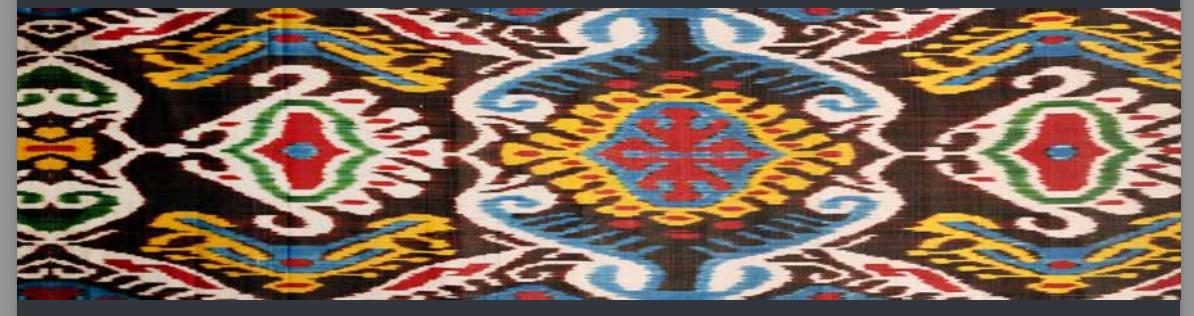
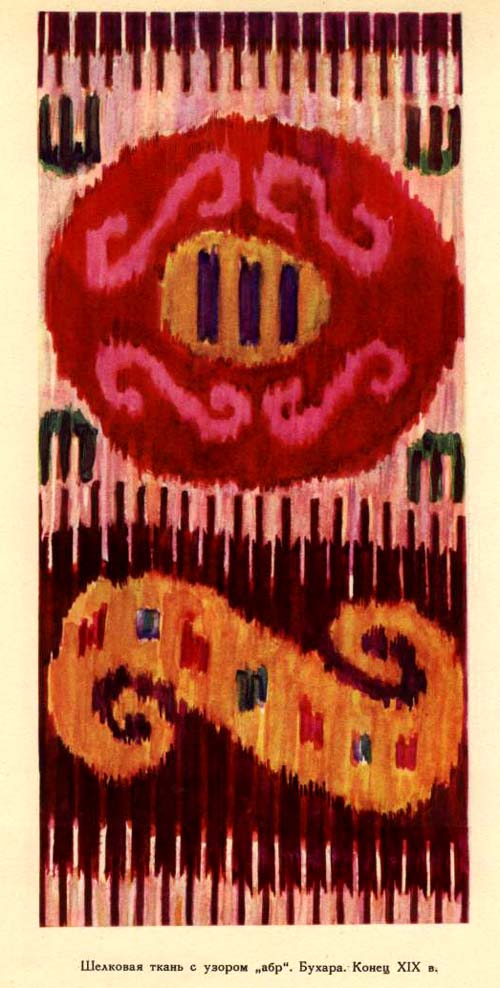
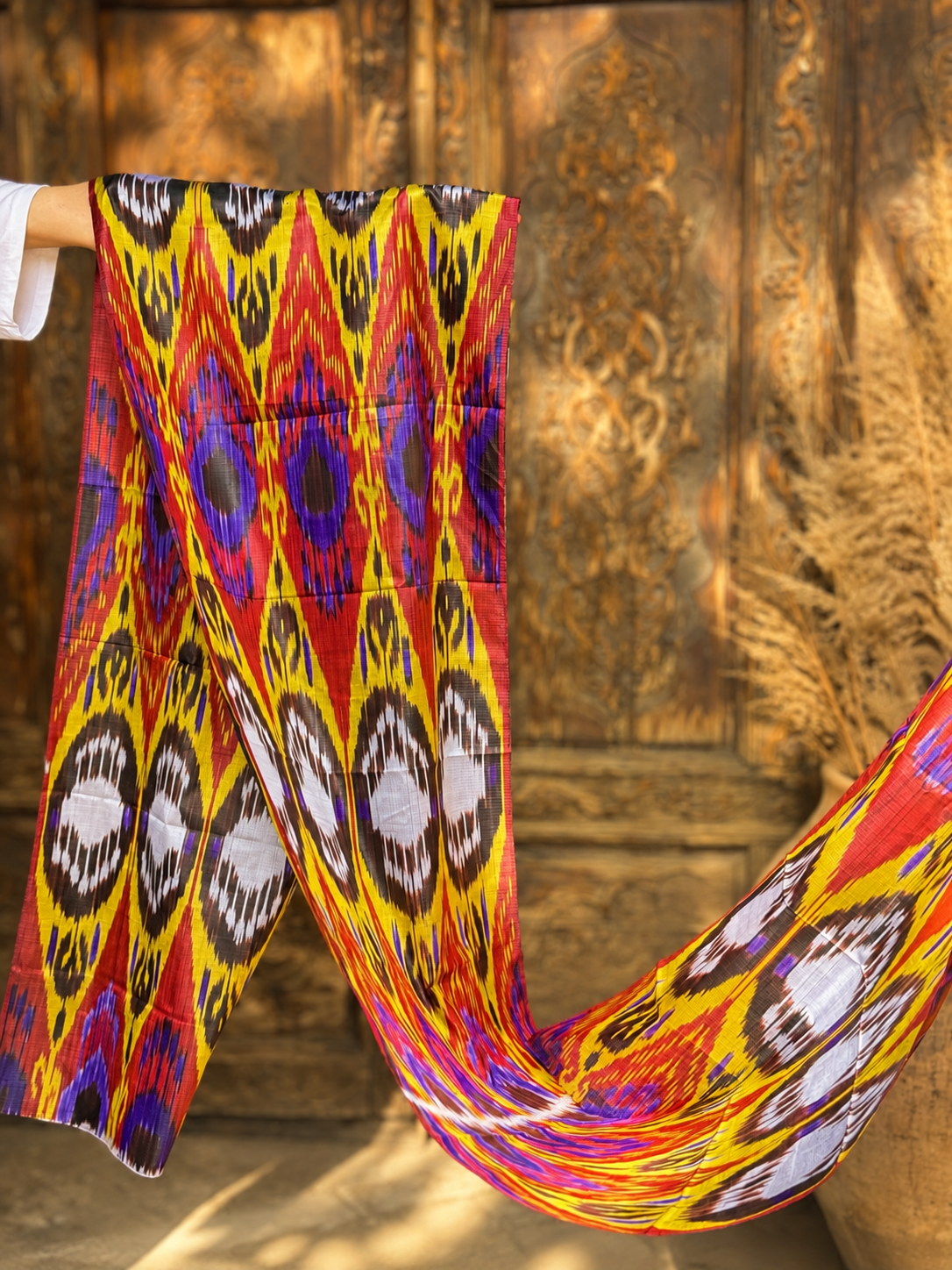
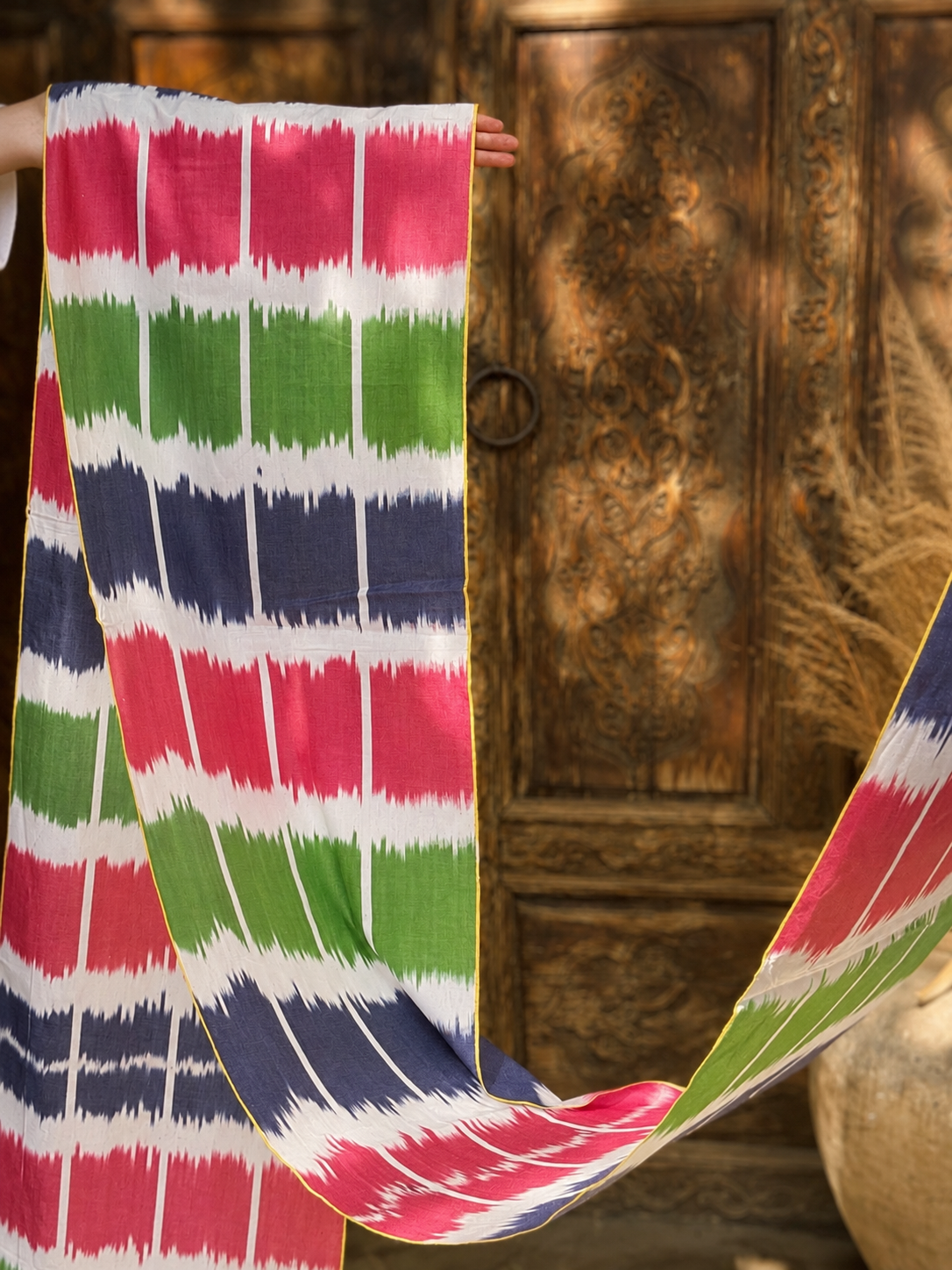
Their name comes from the Persian word abr, meaning "cloud". The word describes their appearance beautifully: vibrant motifs, soft and almost moving contours, as if the design were breathing inside the fabric.
These textiles are not simply decorated surfaces. The motif is part of their visual structure: it begins with the threads themselves, before the fabric is fully woven.
Chapter 01
A Textile Tradition of Central Asia
The book places abrovye fabrics within the long history of textile arts in Central Asia.
Cities such as Bukhara, Samarkand, Margilan, Namangan, and Khujand are associated with renowned weaving traditions.
The Fergana Valley holds a special place: it is described as an important center of silk, with Margilan and Namangan among the key cities for these forms of expertise.
These fabrics are therefore not only decorative objects. They belong to a culture in which clothing, domestic interiors, ceremonies, and regional identity come together.
Chapter 02
Why "Abrovye"?
The word abr means "cloud". The book also records oral traditions explaining the origin of these motifs.
According to one legend, they imitated the reflection of moving clouds in water. According to another, they evoked iridescent spots on the surface of a basin.
These stories are not presented as historical proof, but they express something essential: abrovye is an art of movement, transition, and living contours.
The motif is not perfectly closed or fixed. It floats, transforms, and lets the hand of the master remain visible.
Chapter 03
They Are Not Simple Prints
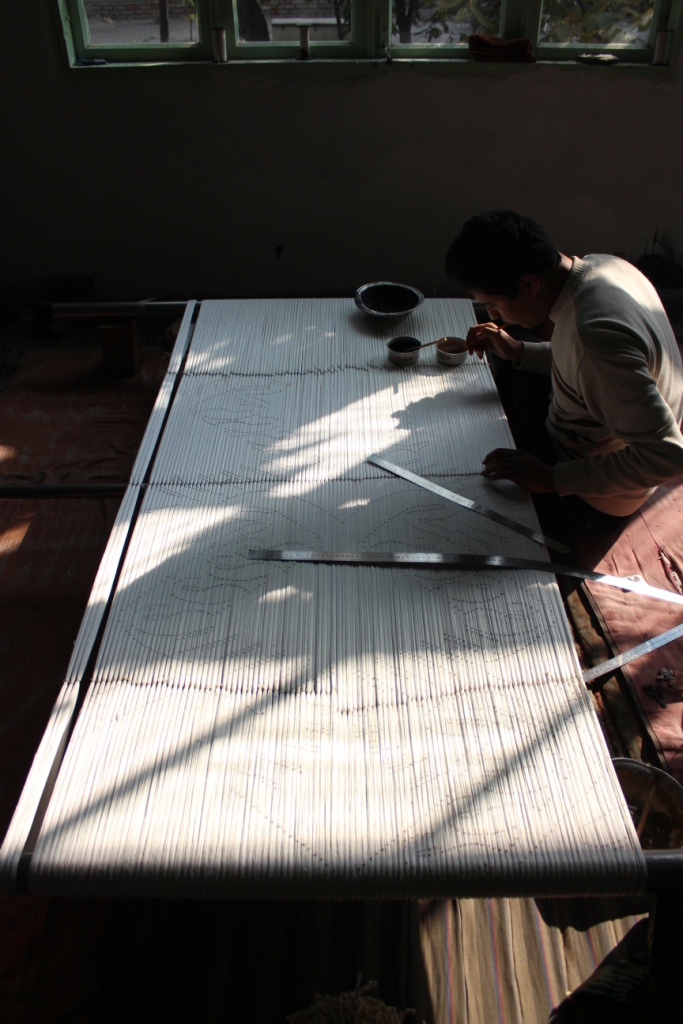
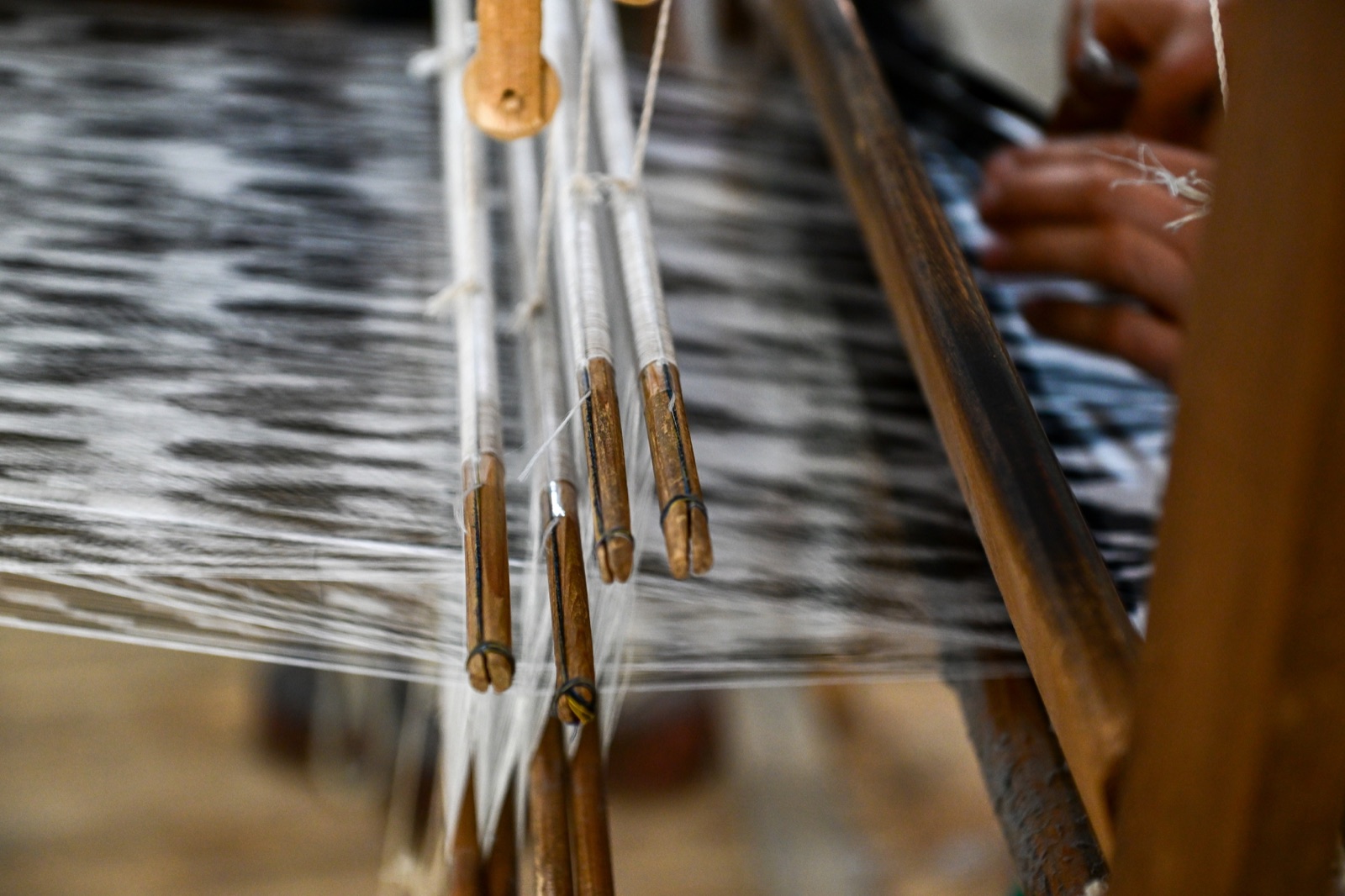
One essential point distinguishes abrovye fabrics from many decorated textiles: the motif is not simply printed on the surface of an already finished cloth.
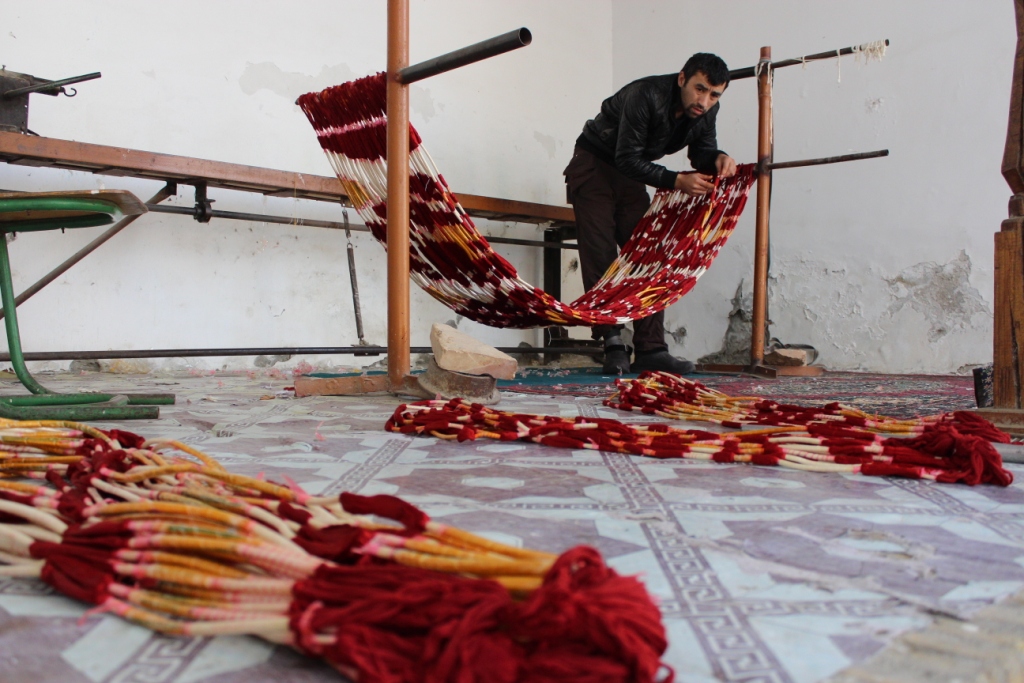
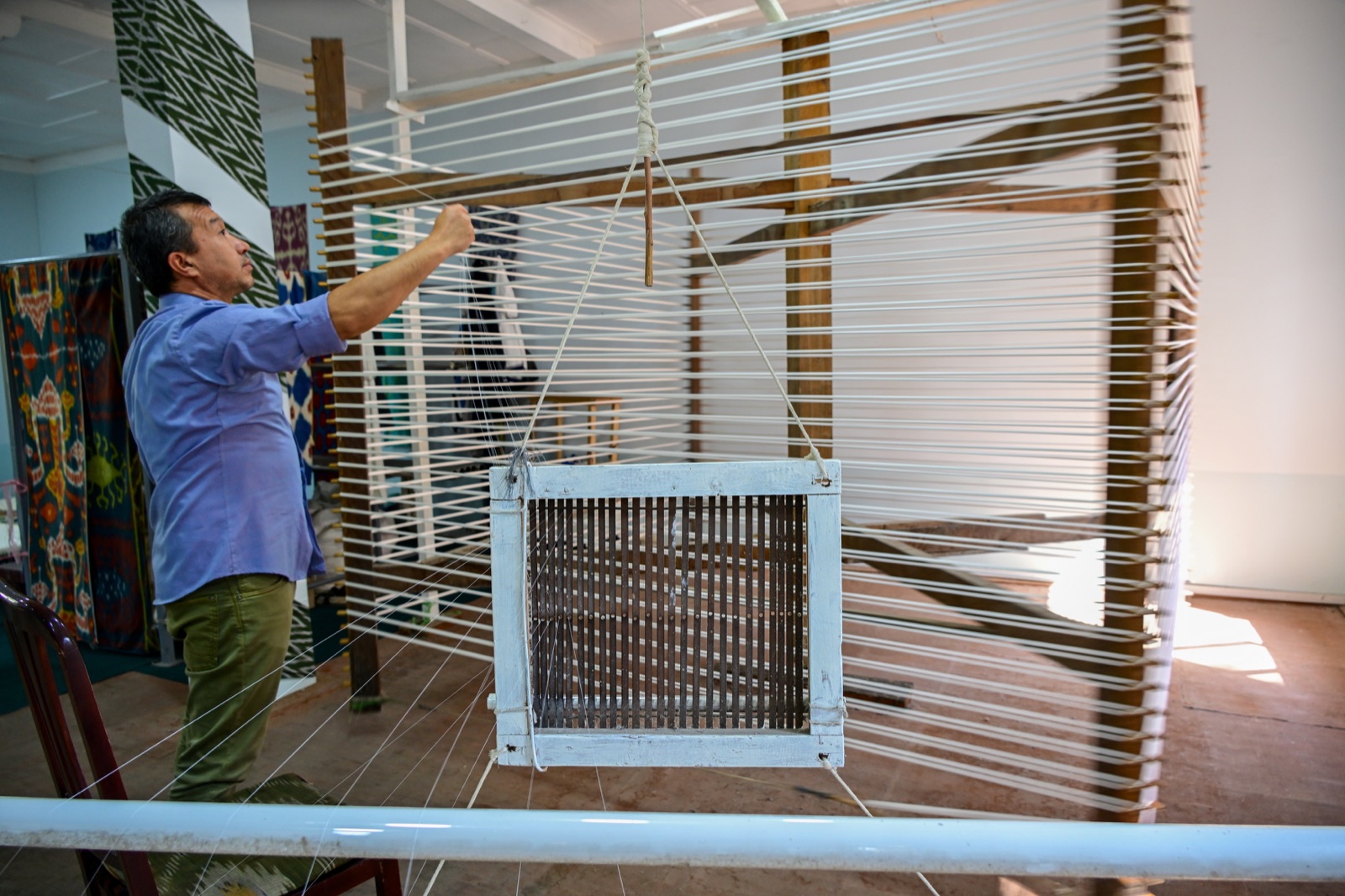
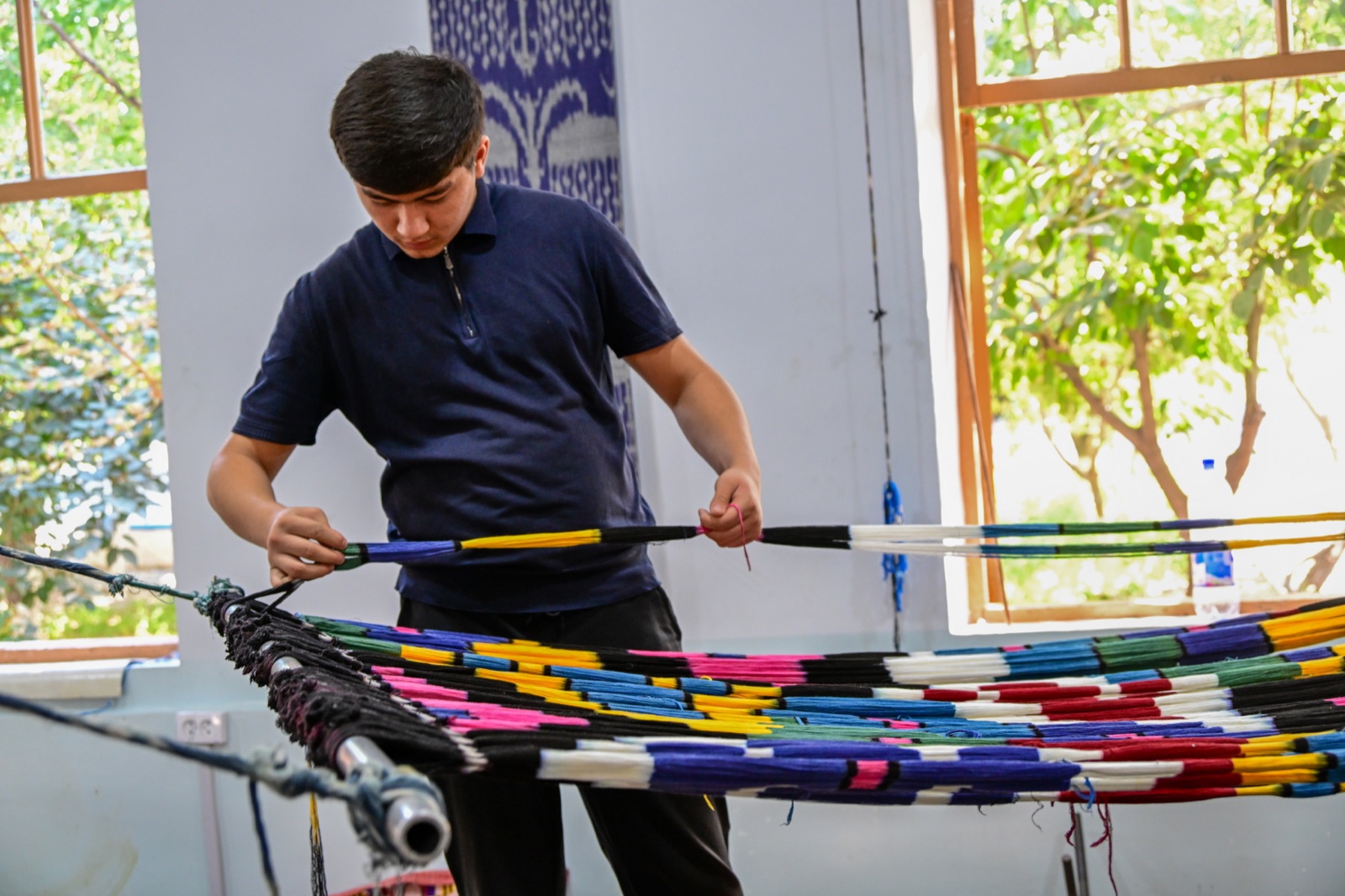
In the tradition described by the book, the design is prepared beforehand, on the threads themselves, before weaving.
In broad terms, the threads are organized, reserved, and dyed by zones or groups. Then, when weaving begins, these colored threads combine to reveal the motif within the material.
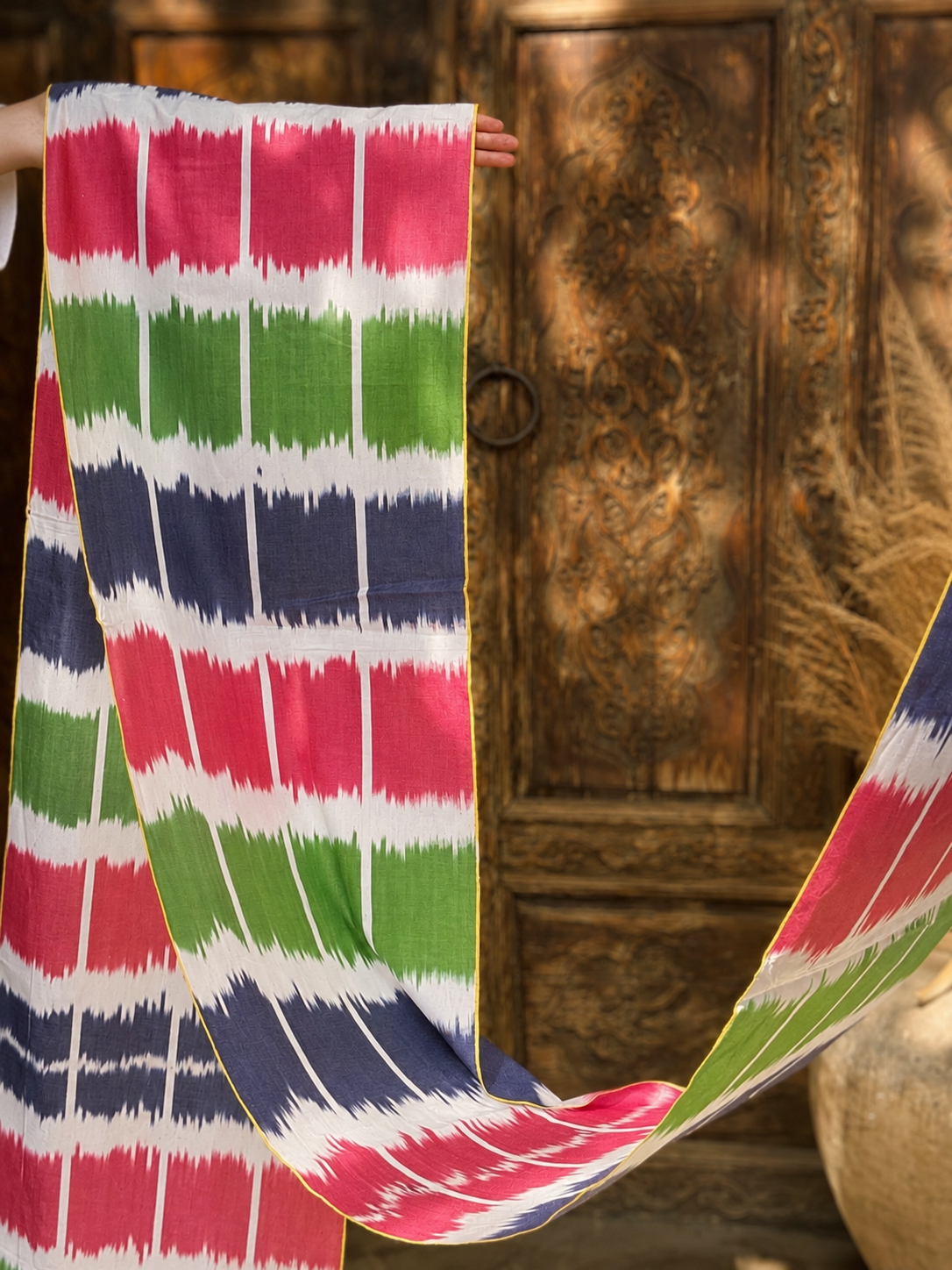
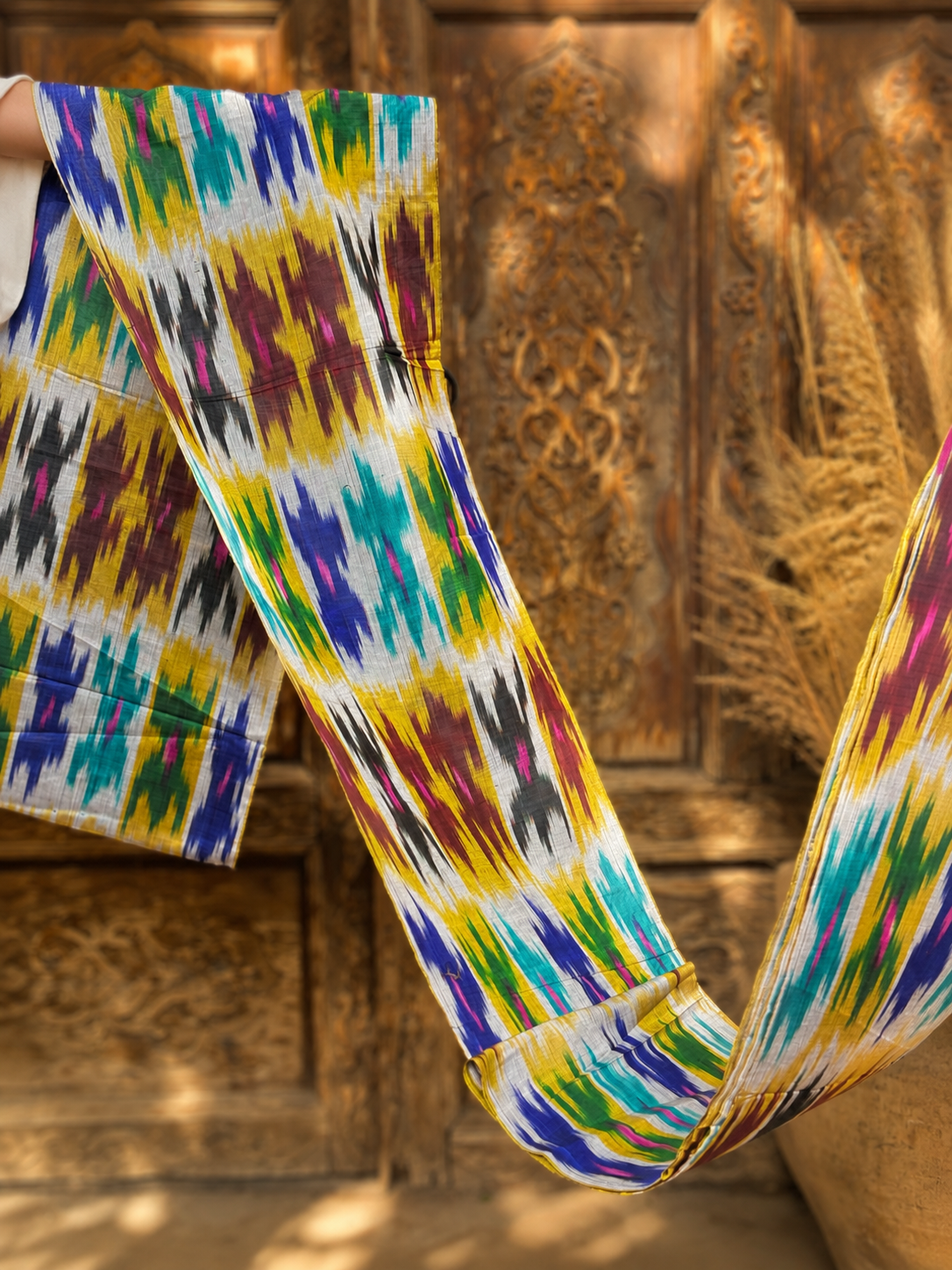
This explains why the contours are not sharp like those of a mechanical print: they keep a vibration, an irregularity, and a depth that belong to the textile itself.
Abrovye is a motif built with the thread, rather than a drawing placed on the fabric.
Chapter 04
An Art of Masters
The book distinguishes several roles in the creation of these fabrics.
First, there are master-artists, who design the motifs and supervise their transfer onto the threads. Then there are master-weavers, who give the design its physical form in the material.
This distinction shows that abrovye is not only a technique. It is a meeting point between drawing, matter, color, and textile gesture.
Training could take place within a family or under the guidance of a master. The book indicates that several years were needed to master the foundations, and then to develop a true creative ability.
Chapter 05
Every Motif Has a Name
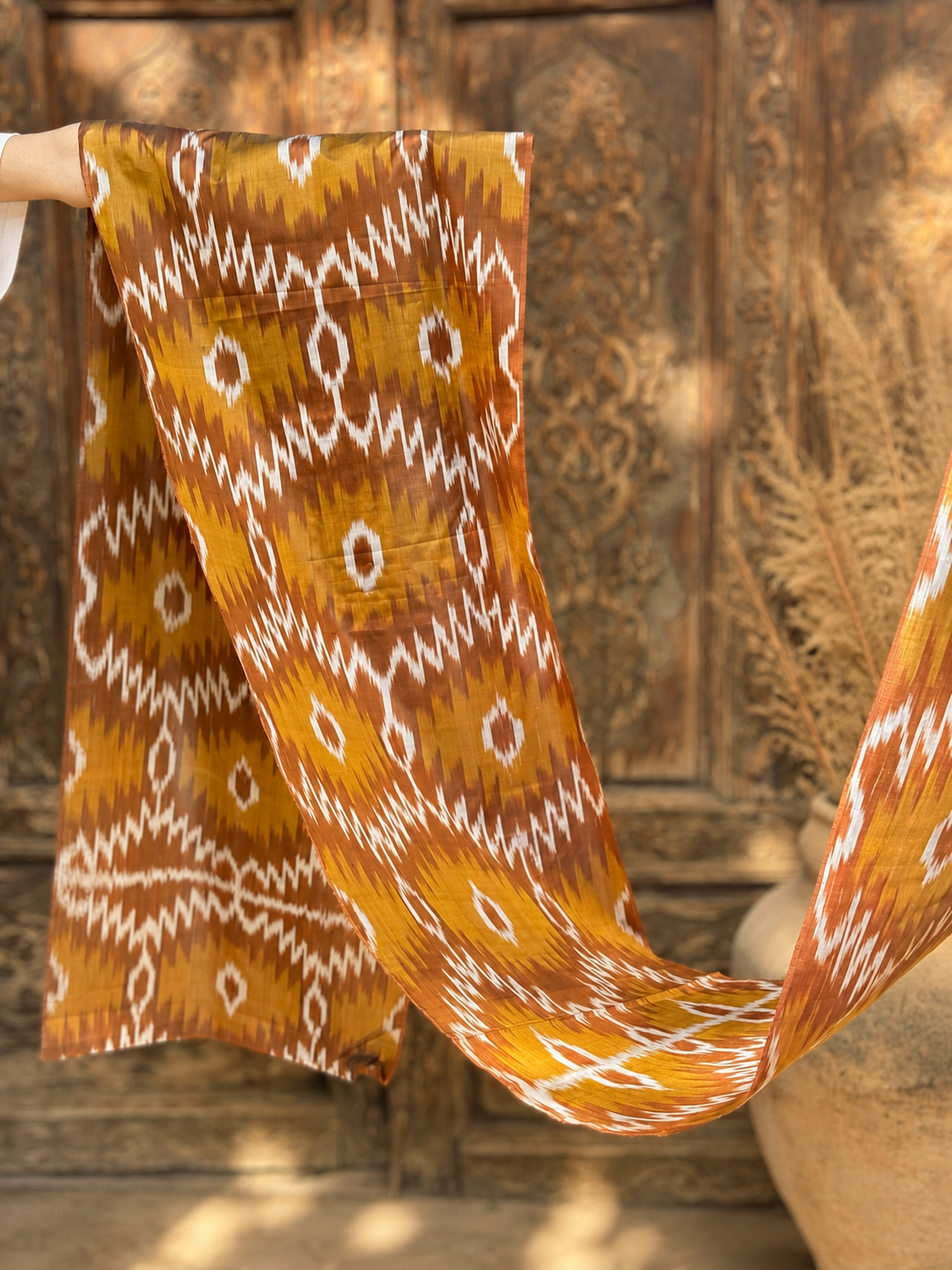
One of the most fascinating aspects of abrovye fabrics is the richness of their motif names.
The book shows that these names can come from nature, everyday objects, animals, places, people, or even literary characters.
The motif is therefore not merely decorative. It can evoke a plant, an animal, an object, a region, an impression, or a story.
Chapter 06
A Repertoire of Signs
Among the motifs inspired by nature, the book mentions, for example:
- darakht: tree
- tuvakda gul: flower in a pot
- bodom: almond
- nok: pear
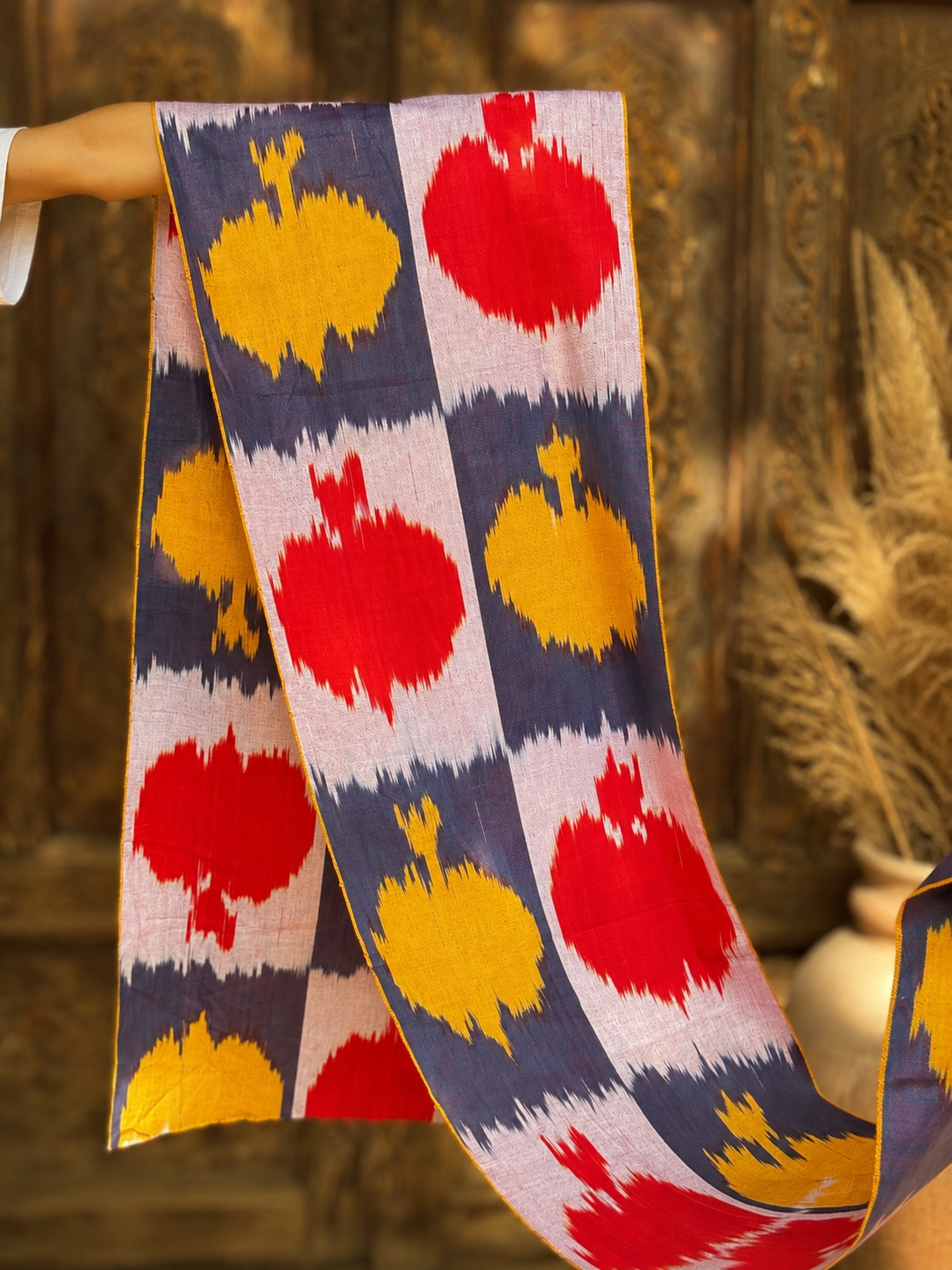
- anorcha: small pomegranate
Other motifs refer to the animal world or to symbolic forms:
- kuchkor shokhi: ram's horns
- tuya paypok: camel's footprint
- kapalak: butterfly
- chayon: scorpion
- ilon izi: snake track
Some names also come from everyday objects:
- tarok: comb
- urok: sickle
- patnus: tray
- nogora: drum
- tumorcha: amulet
Others refer to places or stories:
- Fargona nuskha: Fergana pattern
- Bukhoro nuskha: Bukhara pattern
- Layli va Majnun: Layla and Majnun
- Farhod va Shirin: Farhad and Shirin
- Tokhir va Zukhra: Tahir and Zukhra
Chapter 07
The Beauty of Imperfect Contours
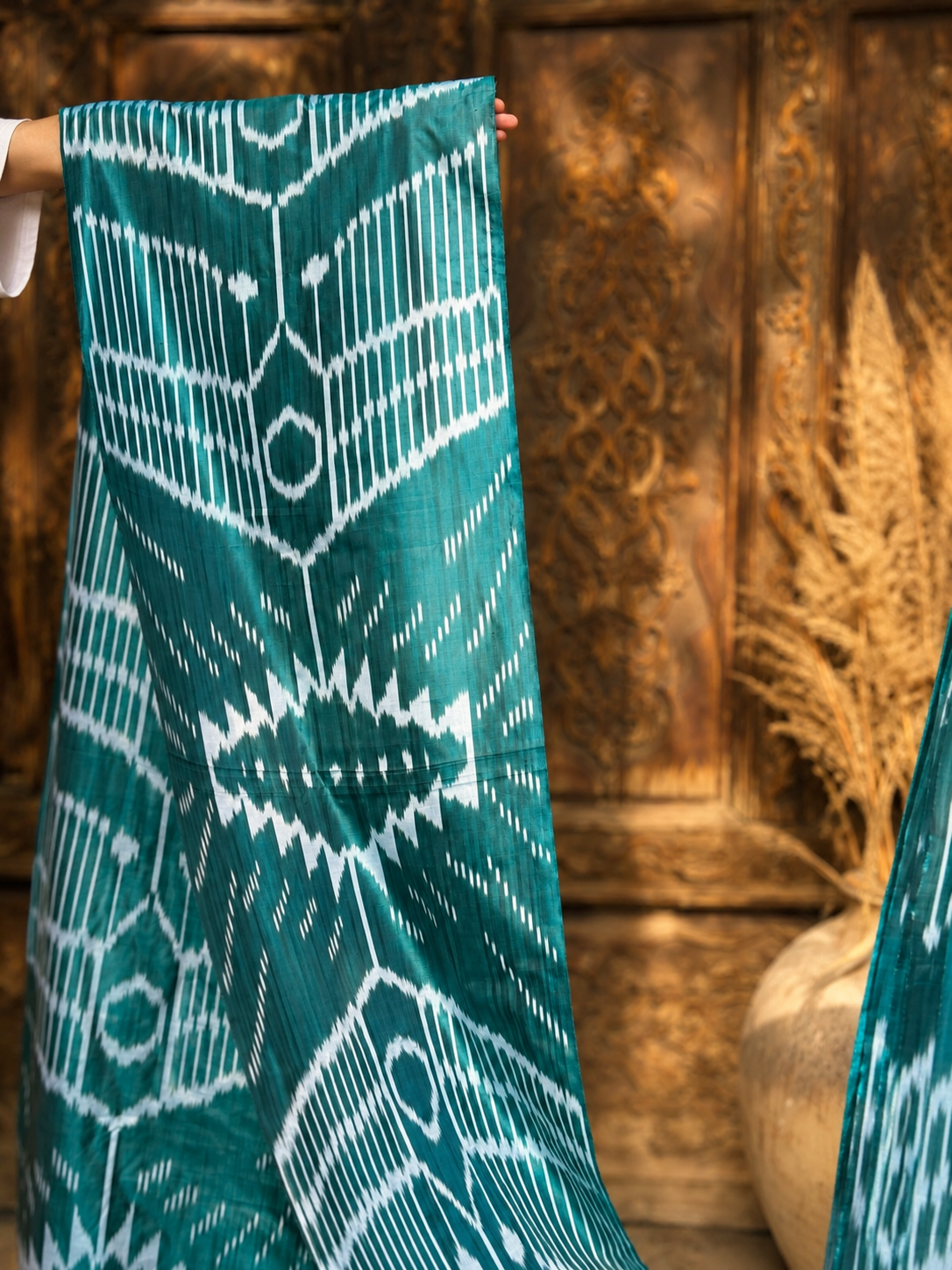
In abrovye fabrics, motifs are often highly stylized. Some geometric designs are easy to recognize, while others become more abstract.
The book insists on an important point: this difficulty in reading the motif is not a weakness. It is a quality specific to this type of fabric.
Transitions, slight shifts, dissolving contours, and passages from one tone to another give the textile a sense of movement.
Abrovye does not always try to represent an object clearly. Sometimes it transforms the object into rhythm, vibration, and composition.
In an abrovye fabric, the motif does not impose itself as a fixed image: it appears, disappears, and circulates through the material.
Chapter 08
Textiles for Clothing and the Home
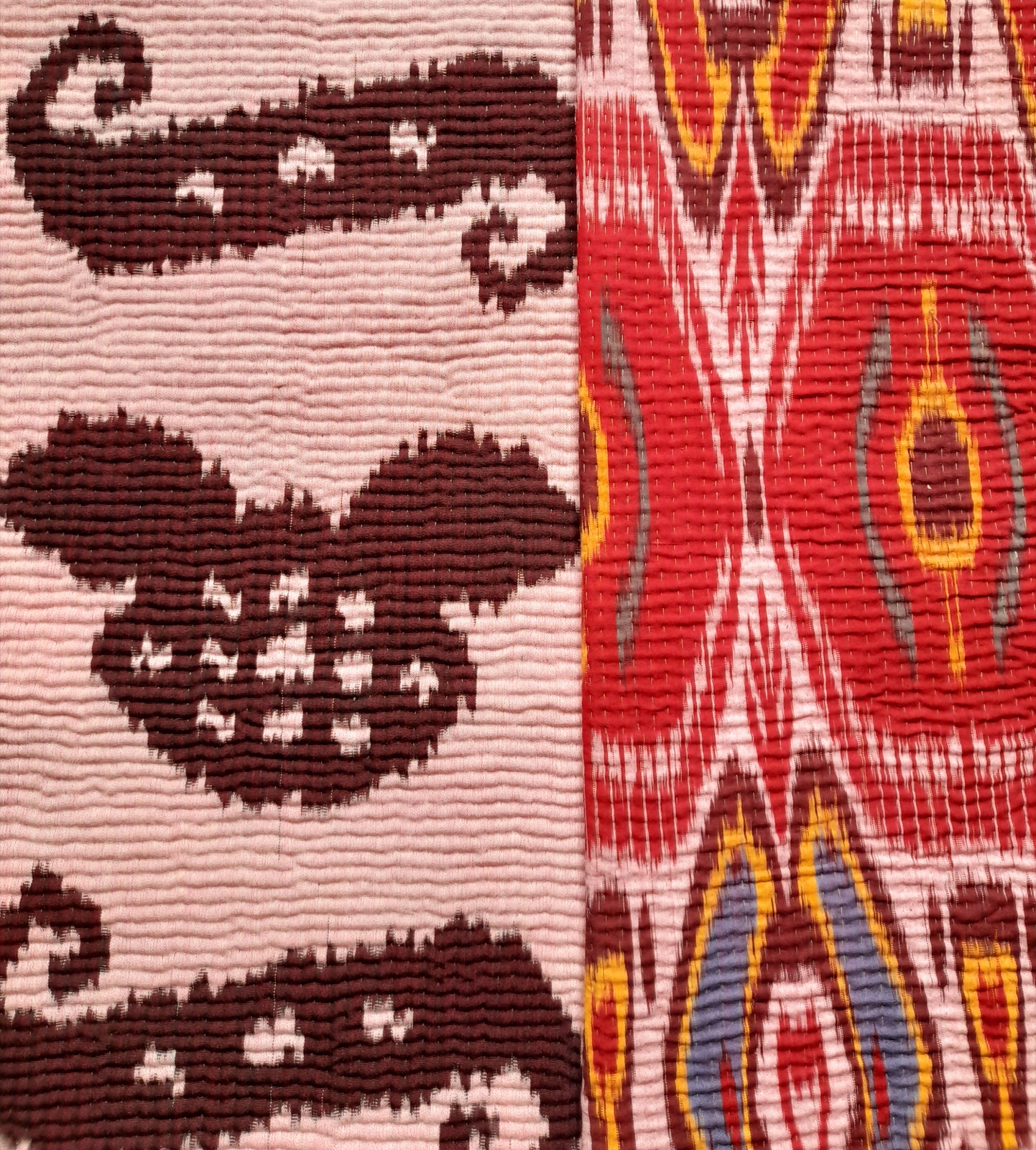
The book describes several types of fabrics associated with this tradition: bekasab, benaras, adras, shoyi, atlas, and khanatlas.
Some were used for clothing. Others served domestic interiors: cushions, blankets, upholstery fabrics, or objects connected with the home.
Khanatlas is presented as a textile with a particularly bright visual effect. Other fabrics, such as adras, can combine silk and cotton and produce a different texture.
These uses show that abrovye fabrics belong to more than ornament alone. They also accompany ways of living, dressing, and expressing cultural belonging.
Types of Fabrics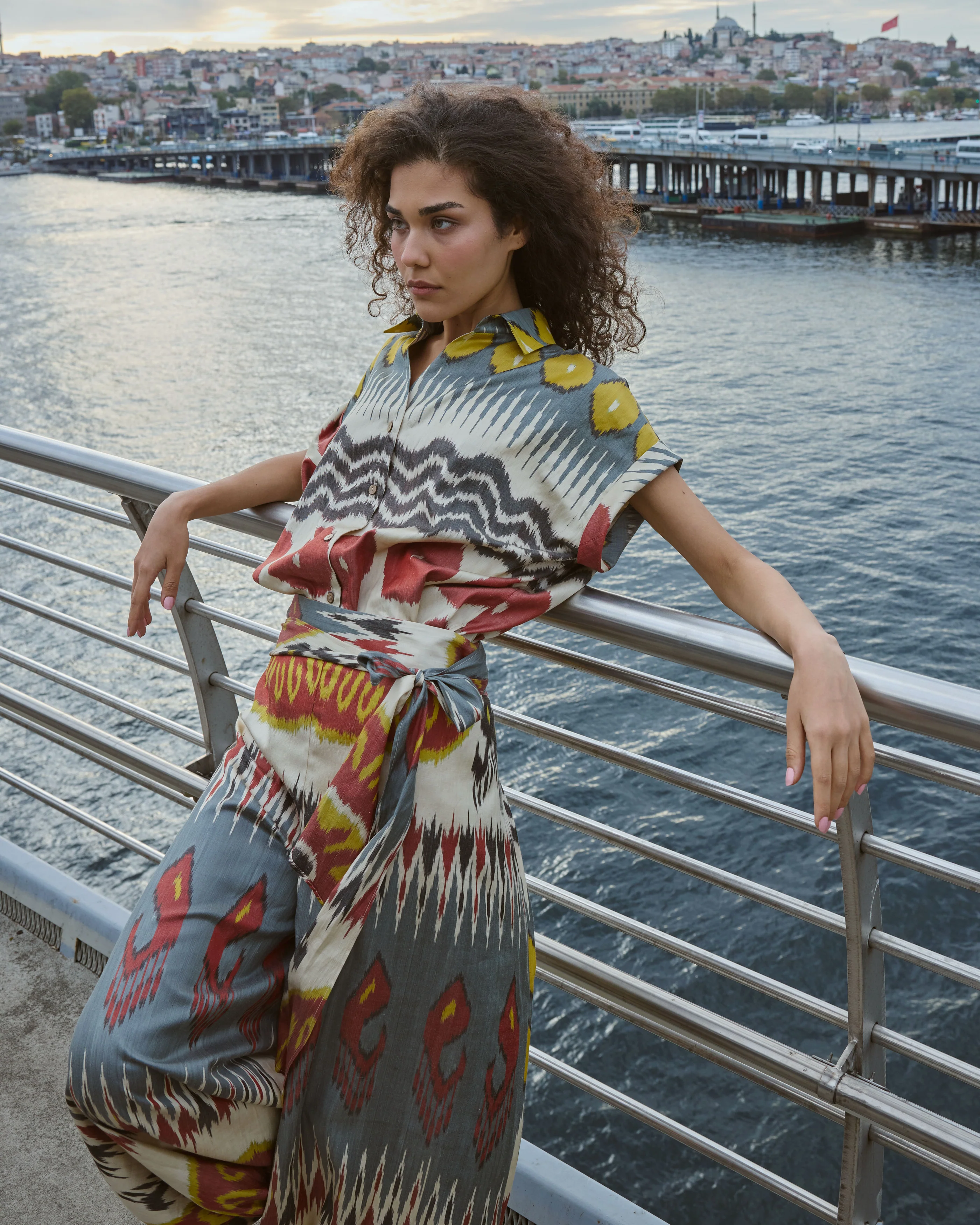
Chapter 09
A Few Details That Make These Fabrics Unique
The word abr means "cloud", a perfect image for describing the soft, moving contours of these textiles.
Some motifs have very concrete names: comb, tray, sickle, drum, amulet, snake track, or camel's footprint. Other motifs refer to famous stories, such as Layla and Majnun or Farhad and Shirin.
The book explains that the blurred contours are not an accident: they are part of the specific character of abrovye fabrics.
Mechanical printing can imitate the general appearance, but it does not fully restore the vibration of contours produced through work on the threads.
Certain cities or schools, such as Margilan and Namangan, are associated with particular styles and masters.
Chapter 10
A Textile Heritage to Look at Closely
Abrovye fabrics tell a story in which silk, gesture, the memory of cities, popular symbols, and the invention of masters come together.
Their beauty does not come only from the motif, but from the way that motif seems to live inside the material.
To look at an abrovye fabric is to enter a world of signs: clouds, trees, amulets, animal traces, love stories, city names, and endless variations around a single textile language.
The closer we look, the more these fabrics reveal what they truly are: not simple ornaments, but fragments of culture woven into thread.